

Empowering Indigenous Youth in Care as They Transition to Adulthood
Guidance for Policy-Makers and Funders
September 19, 2023
Young Indigenous people leaving the child welfare system have important skills and experience. But they’re underemployed and earn less than they would if their talents were fully engaged. On average, a First Nations person who grew up in care on reserve will, over their lifetime, earn $1.2 million less than the average individual from within the total population.
The residential school system has left severe intergenerational impacts on Indigenous families. Whether deliberate or unintentional, the impacts and outcomes of the child welfare system in Canada have mirrored those of the residential school system.
This is a big problem. But it’s also an opportunity to support young Indigenous people, who remain over-represented in the child welfare system. (See Chart 1.)
In 2014, Signal49 Research showed that supporting the education, employment, and mental well-being of young people in care can make a difference over the long term. It can benefit young people, their communities, and Canadian society as a whole. Our new study builds on this earlier work with a focus on Indigenous youth in care and Indigenous child and family well-being agencies.
Chart 1
Indigenous children are over-represented in foster care
.
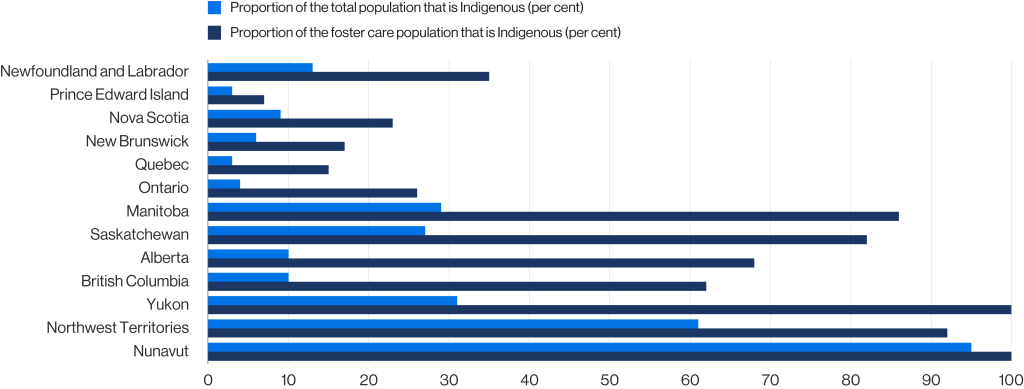
Notes: 1. Examines all children before the age of majority in each province and territory. This differs across provinces and territories. The population aged 0 to 17 was examined in PE, QC, ON, MB, SK, and AB. The population aged 0 to 18 was examined in NL, NS, NB, BC, YT, NT, and NU.
Sources: Statistics Canada; Signal49 Research.
If we don’t take action soon to invest in young Indigenous people who have been in care, Canada could lose $2 to $5.5 billion in its economic potential over the next five years.
We looked at how much income Indigenous adults who were in care make compared with non-Indigenous adults who were in care. On average, Indigenous adults who were in care make $526,500 (or 19.6 per cent) less over their lifetimes. (See Chart 2.)
As part of this study, we interviewed Indigenous child and family well-being agencies to get ideas for how philanthropy and policy can support Indigenous youth aging out of care. Indigenous people need to be the leaders in supporting Indigenous youth.
Indigenous-led programs and services in child and family well-being agencies prioritize identity-building for youth in care. Philanthropy and public policy can help support these efforts, positively affecting mental health, education, and employment outcomes for youth who are transitioning out of care and into community.
Chart 2
Indigenous people formerly in care earn less over their lifetime
(average lifetime total income, $ millions)
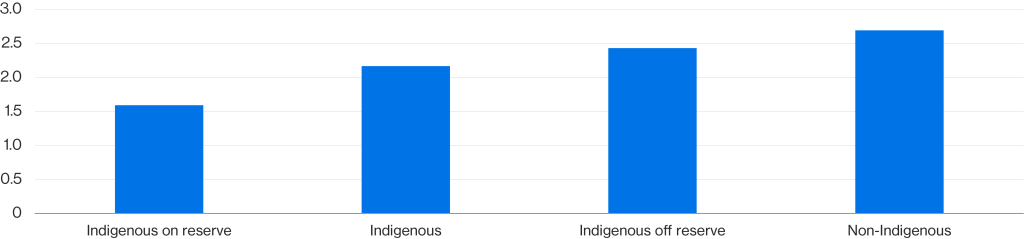
Notes: Includes all children in both foster care and kin care. The average lifetime total income is calculated by dividing the total incomes of each cohort over their lifespan (adjusted for mortality over time) by the number of cohort members when they age out of care (i.e., the entire cohort without adjusting for deaths).
Sources: Statistics Canada; Signal49 Research.
What should funders and government consider?
- Compared with foster care, kin care aligns more with Indigenous values and self‑determination. Kin care refers to formal and informal caregiving by relatives (short term or long term) for children in need of protection. It’s a better fit for the direction of Indigenous‑led child welfare in Canada.
- Indigenous children and youth in kin care have better mental health outcomes and are more likely to pursue a post‑secondary education than Indigenous children and youth in foster care. However, they may need extra help to finish high school.
- Indigenous children and youth in foster care living on reserve have the highest need for educational supports.
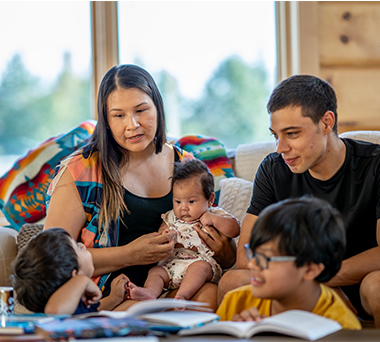
Kin care: Toward self‑determination, community connection
The child welfare system can negatively impact the social, physical, and emotional well-being and educational outcomes of the youth who are exposed to the system. For Indigenous youth, these effects can be worse when they also face poverty, live in remote areas or expensive urban areas, or experience intergenerational trauma. They may also lose connection with their culture and community.
In 2016, the Truth and Reconciliation Commission of Canada (TRC) made it clear that the number of Indigenous children in the child welfare system is a growing crisis. In 2016, more than half of the children in foster care were Indigenous, and this number continued to grow by 2021.
Using census data, our profile distinguishes between children and youth in two care settings—foster care and kin care.
Children in care receive caregiving through residential placements like group homes, foster care with non-relative caregivers approved by an agency, and kin care with formal and informal caregiving by relatives (short term or long term). Long-term kin care placements for Indigenous children are often called customary care.

For Indigenous children in need of care, receiving care from kin—either on reserve for First Nations children or what is called off reserve for First Nations, Métis, or Inuit—is associated with better mental health. Compared with Indigenous children and youth in foster care, Indigenous children and youth in kin care are also more likely to pursue a post-secondary education, but they may need extra support during crucial high school years.
As federal legislation introduced in 2019 creates new opportunities for Indigenous child welfare models that are based in self-determination, we expect to see a greater policy focus on supports tied to kin care. Our full report provides examples of how Indigenous child and family well-being agencies help children and youth build and keep lifelong community connections. These connections act as a support system when they reach adulthood.
Our leadership is not risk averse. We want to have zero children transitioning out of care because they aren’t in care to begin with.
Program manager, Indigenous child and family well-being agency
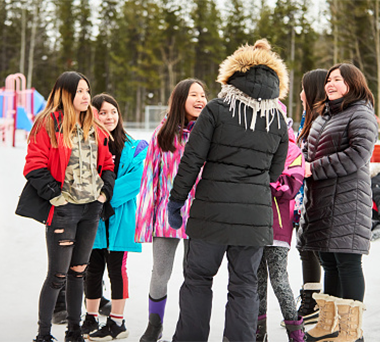
Shifts for Indigenous child and family well‑being agencies
In 2019, federal legislation prioritized Indigenous Nations’ authority over Indigenous children in care. This legislation was based on the “United Nations Declaration on the Rights of Indigenous Peoples” (UNDRIP), the TRC’s Calls to Action, and Indigenous peoples’ inherent right to self-determination.
The law focuses on prevention, helping families before problems arise, and making Indigenous people the decision-makers regarding their culture, families, and children in care. However, each province has implemented this differently.
We looked at four provinces (British Columbia, Manitoba, Ontario, and Quebec) as qualitative case studies, highlighting promising practices from Indigenous child and family well-being agencies in urban, rural, and remote areas. One of the key Indigenous‑led services we see across agencies is supporting youth to build lifelong community connections. Philanthropic organizations and policy‑makers can champion the work of Indigenous child and family well-being agencies, which will help support mental health, education, and employment for young Indigenous people aging out of care.
We ask ‘What do you need?’ and ‘How can we support you?’, not whether your needs fit a checkbox.
Practice manager, Indigenous child and family well-being agency
Recommendations for policy and philanthropy
What are some solutions?
- Many Indigenous child and family well-being agencies want to have safe facilities for children and youth that have a sense of family and kinship. Youth can drop in for tea, counselling, and cultural support. Philanthropy and policy can help address infrastructure gaps.
- To sustain and scale Indigenous-led initiatives, agencies need funding for Elders and specialists who do work on relationship-building and prevention. This work focuses on strengths. In addition, there are education funding disparities between First Nations living on-reserve and those living off-reserve, as recognized in the TRC Calls to Action. This disparity needs to be addressed.
- Young people should also have the chance to co-steer the child welfare sector. For example, they can give advice on research and help develop policy that governs agencies.
- Policy-makers need to make sure that programs and services are available for young people when they need them. Instead of using age as a marker for when a young person is no longer in need of programs and services, policy-makers should work with agencies and communities to know when a young person has the life skills they need to succeed. Youth need support during life transitions.
Following the lead of Indigenous child and family well-being agencies, policy and philanthropy have an immediate opportunity to increase educational attainment, employment, and overall well-being for Indigenous youth transitioning from care into adulthood.
Access the full report:
Empowering Indigenous Youth in Care as They Transition to Adulthood: Critical Actions for Philanthropy and Policy
September 26, 2023 • 135-min read

This research was prepared with financial support provided through RBC Future Launch. RBC Future Launch is a program that increases youth access to skill development, networking opportunities, work experience, and mental well-being supports and services, empowering the youth of today for the jobs of tomorrow.