


Working Through COVID-19
Flexible Work Environments Survey
The pandemic has super-spread disruption, transforming the way we work like never before. In March 2020, what was long considered improbable for many organizations—a remote workforce—became an immediate reality.
Now with the vaccine rollout well under way, organizations are beginning to consider what the workplace of the not-so-distant future will look like. Signal49 Research asked organizations across the country whether they’re planning on calling employees back to the office, offer remote work, or a combination of both.
Here’s what we found.
Note: Survey responses were collected May 11–21, 2021. These findings are part of a Signal49 Research series on work and pay during the COVID-19 pandemic.

For many organizations, in-person work has long been the norm, and hybrid or remote work a perk offered by few.
Disruption over the last 15 months has upended what employers and employees think of as normal—if normal still exists.
For context, in January 2021, 5.4 million Canadian employees aged 15 to 69 worked most of their hours from home, compared with only 1.8 million pre-pandemic.
The improbable became a necessity
On average, the organizations we surveyed saw the proportion of their remote workforce grow tenfold during the pandemic.
The pre-pandemic workplace
Q: Before the pandemic, what proportion of your workforce was fully in-office, hybrid, or fully remote?
(n = 236; percentage of employees)
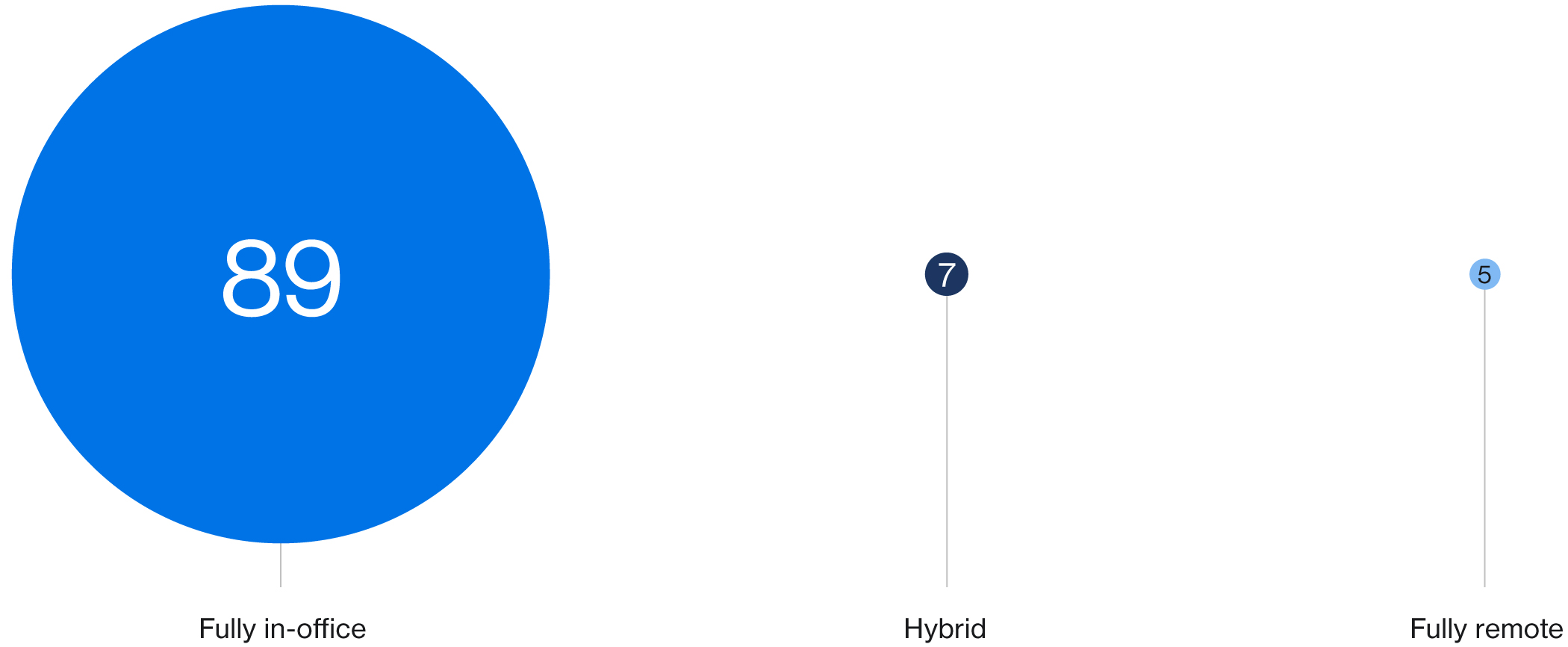
Note: Total does not add to 100 due to rounding.
Source: Signal49 Research.
A substantial flip during the pandemic
Q: Throughout the pandemic, what proportion of your workforce has been fully in-office, hybrid, or fully remote?
(n = 236; percentage of employees)
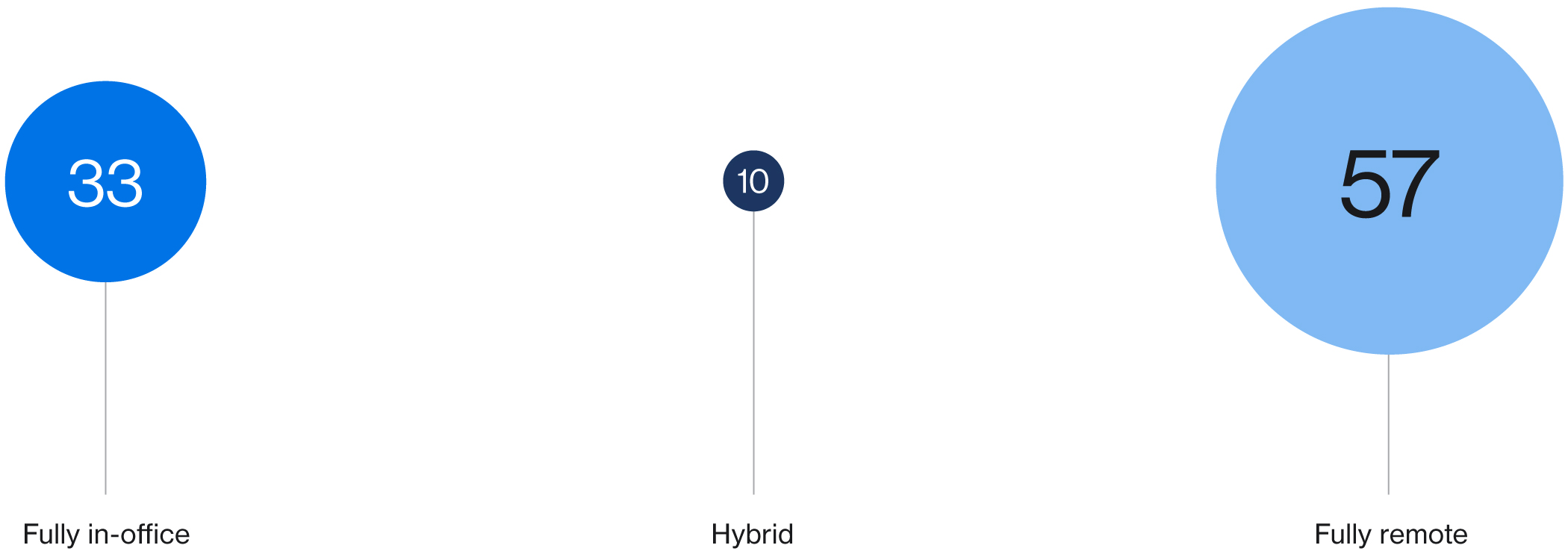
Source: Signal49 Research.

What now? What’s in store for Canadian workplaces?
How are organizations answering the record number of employees who want to continue working from home?
What work arrangements and new flexibilities are on the table?
And what concerns do employers have around how much time will be spent in-office, recruitment/retention, and corporate real estate needs?