


Indigenous Trusts
Building Wealth for Future Generations
January 31, 2024
Trusts are an important tool in Indigenous self-determination and economic development. Some have been active for decades, collectively managing billions of dollars, and providing returns for the communities.
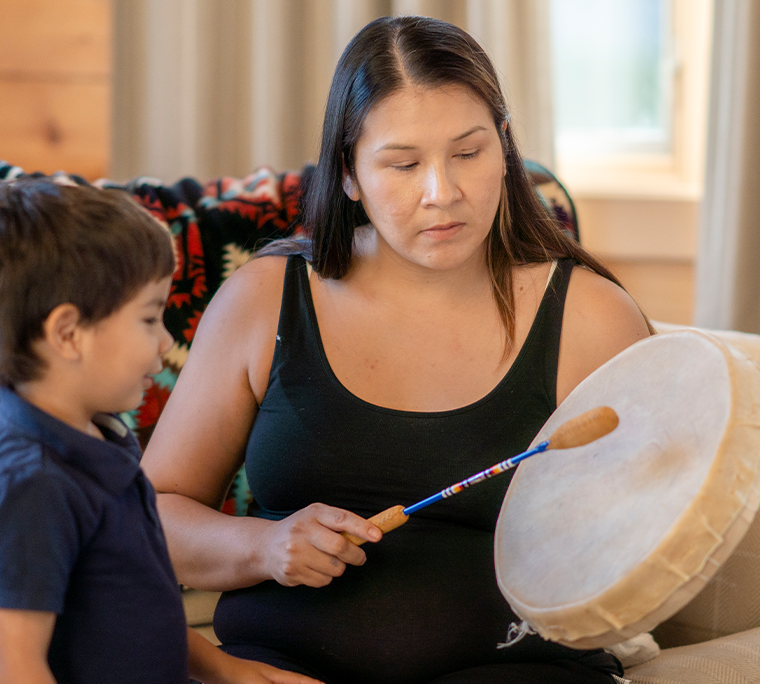
Trusts are a growing resource for Indigenous communities and for many nations act as an important mechanism for Indigenous sovereignty and self sufficiency. Many nations have adopted the use of trusts as a way to manage and grow their resources for future generations.
On behalf of the Center for the North, Signal49 Research is researching how Indigenous trusts are managed and what they envision for the future of trusts and wealth management. This project will share best practices of managing trusts, and explore innovative ideas for the future of trusts.
Are you a trustee or an advisor for an Indigenous trust?
Contact us today to participate in this project.

Guiding questions
What are some of the common practices of successful trusts?
How can trusts adapt and evolve their financial management strategies in the future?
Learning from leading trusts
Settlement claims and modern treaties have resulted in at least $13 billion in compensation for hundreds of Indigenous communities.
Many communities hold these funds in trust with a goal of sustaining wealth for future generations, economic development, or a more specific mandate like education or language protection.
Trustees have a wealth of experience and knowledge that may be shared among other communities, policy makers, finance professionals, and other trustees.
Trustees may also have innovative approaches and ideas for how this wealth might be managed as Indigenous communities continue to grow. In interviews with trustees and their advisors, we have explored common practices for managing trusts and the relationships that are connected with them. We will continue to investigate new ideas for the future of Indigenous wealth management in order to bring them to the forefront of the conversation around Indigenous economic development.
What we’ve learned:
- Every trust is unique. Each community has a different set of circumstances that impacts the way the trust is formed and managed. Our participants emphasized that what works for one trust may not work for another.
- Engagement and relationship building are important at every stage of a trust’s lifecycle, from its inception to its every-day operations. Ensuring the community and leadership’s voices are heard and considered is crucial to getting support and creating a shared vision for the future.
- Investing in training and education can have broad impacts. Trustees and advisors placed a high importance on educating new trustees, Chief and Council or other leadership, and community members. This helped to build financial literacy and understanding of how the trust operates, and can have a long-term effect of building capacity within the community.
- Transparency in trust operations helps to build strong relationships. Managing relationships between the trust, Chief and Council, and beneficiaries can be challenging. Our participants found that educating everyone on roles, responsibilities, and governance helped to reduce uncertainty and build positive relationships. Accountability in financial statements, documentation, and clear policies and processes helped to build trust.
What’s next?

The conversation around reconciliation and Indigenous self-determination is changing, with more interest from government, the corporate world, and the public. In this transformative period, Indigenous communities are looking ahead to see how they might adapt their approaches for better outcomes. Our next stage of work will explore sovereign wealth funds, shared services models, impact investing, and other approaches. We will also explore some of the intermediate steps required to get Indigenous communities ready for these opportunities.
Learn more about the importance of Indigenous trusts below.
Understanding Indigenous Trusts
A trust is not a legal entity like a person or corporation, but rather describes a legal relationship created between a beneficiary, settlor, and trustee, as defined in a Trust Agreement.
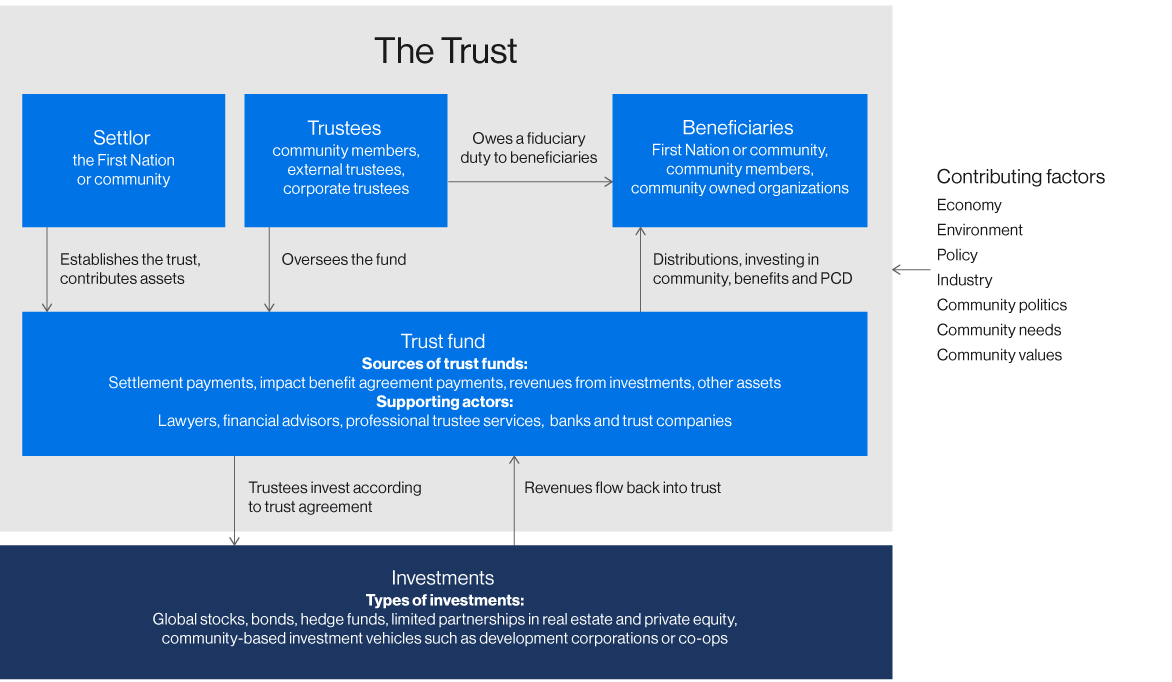
Why do Indigenous communities choose trusts?

Trusts vary in structure and objective depending on the needs of a community. They can be set up for long term stability with input from community members and advisors. They can be kept separate from community politics, while also investing in the community’s priorities.
Ownership and control of wealth: Trusts offer a mechanism through which nations can control the use of their wealth.
Tailored structures: The structure of a trust depends on the needs of the community. Each trust has an agreement that is formed to guide the trustees on everything from main objectives, investment strategy, to reporting to the community and administrative tasks.
Long term stability: Changes in community leadership can make long-term planning a challenge. The trust agreement outlines the main goals of the trust and a series of policies that inform the management and administration of the funds.
Separation from politics: Trusts can create a mechanism for managing funds that is separate from the day-to-day politics of the community. Adhering to the mandate and policies laid out in the trust agreement allows the trustees to keep a big-picture and future oriented view of the funds, rather than being influenced by shorter term needs or issues.
Prioritizing the nation’s needs: When the trust agreement is formed, communities can specify certain causes or organizations that will be funded by the trust. Some trusts prioritize education, supporting elders, language retention, or infrastructure, while others have a mandate for business development or environmental sustainability.
Input from community representatives and financial experts: The trustees can include community members, council members, investment managers, financial advisors, lawyers, or others. Some trusts have an elder or youth delegate to ensure their perspectives are considered. This can be fully customized depending on the needs of each community.
Policies developed by the community: The agreement can include an investment policy which guides any investments that are made using the trust money. This provides guidance for trustees and portfolio managers.
Challenges with trusts
In some cases, a trust agreement can be restrictive or inflexible, causing administrative problems down the road. This may happen if a trust structure is decided during a settlement agreement, if the community is working with legal advisors who are not knowledgeable about the community, or if the agreement and strategy is developed without the community’s input. It is situations like these that cause some trustees and communities to feel as though the trust system perpetuates a paternalistic approach, or that they are in conflict with their governance systems.
Settlements, Trusts and Treaties
Canada’s colonial history and the harm it has caused Indigenous people, culture, and well-being has created many challenges for Indigenous communities. Settlements such as land claims, modern treaties, and specific claims (many of which resulted in community trusts) have been a way to repair some of the damages that were done; they have resulted in land, wealth, and governance being put back into the hands of Indigenous communities to manage as they see fit. These settlements represent an important part of Canada’s path to reconciliation and Indigenous self-determination.
Chart 1
Estimated $16.6B* in settlements since 1970
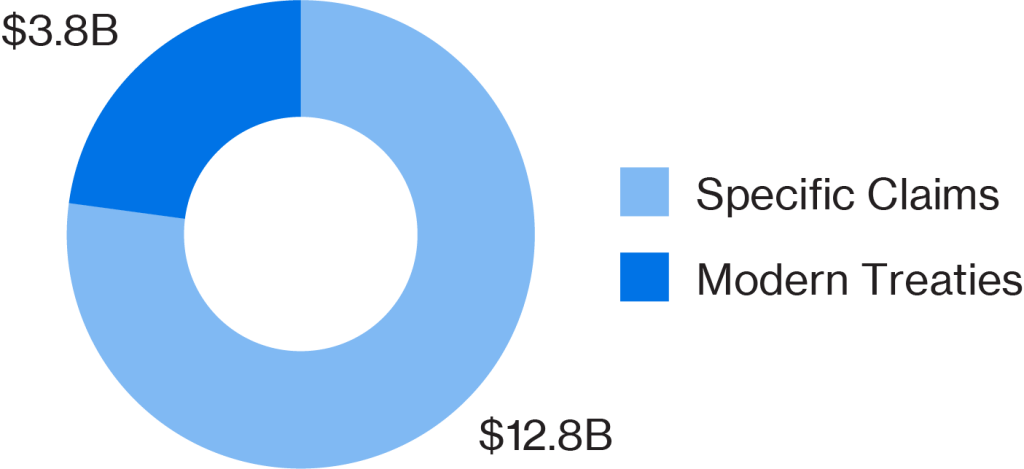
*does not include provincial settlements, Impact Benefit Agreements or commercial agreements
Sources: Information Management Branch Aboriginal Affairs and Northern Development Canada, “Reporting Centre on Specific Claims,” 2021,
https://services.aadnc-aandc.gc.ca/SCBRI_E/Main/ReportingCentre/External/externalreporting.aspx.
Signal49 Research.
There have been at least….

669
Specific Claims Settlements*
26
Modern Treaties**
* Aboriginal Affairs and Northern Development Canada, “Reporting Centre on Specific Claims.”
** Government of Canada; Crown-Indigenous Relations and Northern Affairs Canada, “Modern Treaties,” administrative page, (February 22, 2023), https://www.rcaanc-cirnac.gc.ca/eng/1677073191939/1677073214344.
Trusts
An analysis of 313 trusts showed that over a third are located in BC, but Alberta, Saskatchewan, and Ontario have the highest value of trusts.
In 2017 there was…*
$269M
In revenue generated from trusts
5%
Average contribution to annual revenues
4-6%
Average expected annual return among leading trusts
* Government of Canada; Indigenous and Northern Affairs Canada; Communications Branch, “First Nation Profiles,” fact sheet; resource list, (2021), https://fnp-ppn.aadnc-aandc.gc.ca/fnp/Main/Search/SearchFF.aspx?lang=eng.
What are leading trusts paying out?
$1.3B
Cumulative distributions by Nunavut Trust as of 2021*
$1.2B
In projects funded by the Akwesasne Community Settlement Trust**
* “Nunavut Trust 2021 Financial Highlights.” Nunavut Trust. Accessed August 10, 2023. https://www.nunavuttrust.ca/wp-content/uploads/2022/10/2021_NT_Financials_ENG.pdf.
** “Projects – Mohawks of Akwesasne Community Settlement Trust,” accessed August 10, 2023, https://akwesasnetrust.com/projects/.
Trusts play a role in sovereignty and self sufficiency

Indigenous trusts are steppingstones towards self sufficiency in First Nation, Inuit, and Métis communities. They can be a way for Indigenous communities to manage their wealth and grow it for the future. Trusts can create self sufficiency in the community by investing in local initiatives, providing benefits (health, education, housing), or allocating per-capita distributions.
Trusts often cap off an agreement that seeks to redress past injustices or resolve historic conflicts between Indigenous groups and the Crown. As such they can be emotionally charged symbols of past traumas and longstanding grievances – sometimes dating back hundreds of years. Many settlement trusts have specific names that incorporate historic places, events, and intentions for future generations. In this historic context, trustees may face a range of unique challenges tied to the individual grievances and emotional needs of beneficiaries.

Want to learn more?
Every trust is different, and the best way to learn about them is from the community or trustees themselves. Here are some resources from different trusts:
- How do trusts work? Learn about the history and operations of the Wikwemikong Trust, or check out some of their Frequently Asked Questions.
- Why are trusts formed? The Yekau Lake settlement, about Federal practice bombing ground on the Enoch Cree reserve, is one of the stories behind settlement trusts and why they are needed.
- What do trusts fund? The Mohawks of Akwesasne Community Settlement Trust has shared its funded projects for years.
Be part of our research
Are you a trustee or an advisor for an Indigenous trust? Contact us today to participate.
Want to learn more? Check this page for updates on our research.