



New Treatments Are On The Horizon:
Is Canada Ready?
Effective therapies for Alzheimer’s disease and other dementias will change people’s lives. Those living with the disease have waited a long time. Now, the era of disease-modifying therapies is upon us.
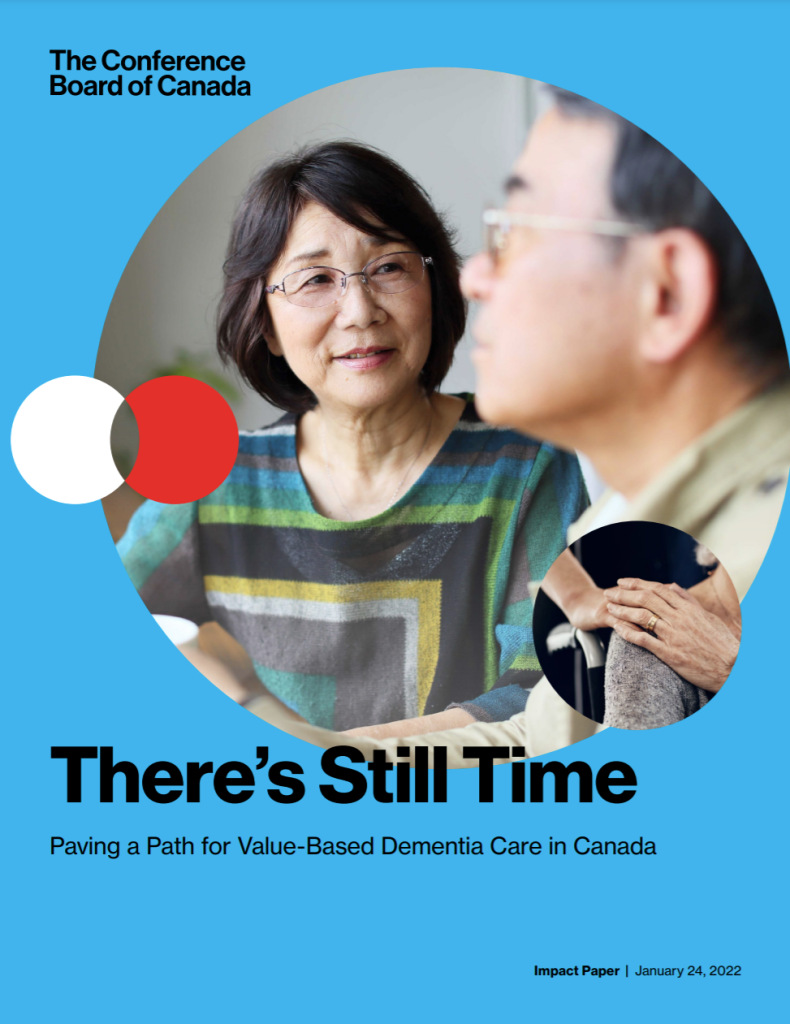
Read the impact paper:
There’s Still Time: Paving a Path for Value-Based Dementia Care in Canada
January 24, 2022 • 66-min read

Canada is Failing People with Alzheimer’s
Early diagnosis is essential for treating dementia. Currently, people with Alzheimer’s are not being diagnosed early enough in Canada. This is the greatest barrier to groundbreaking new treatments.
As much as 50–60% of people with dementia are undiagnosed or misdiagnosed.
As more severe symptoms emerge, patients and their caregivers turn to emergency rooms.
It often takes several years and multiple visits with different healthcare providers before a diagnosis is finally made.
As more severe symptoms emerge, patients and their caregivers turn to emergency rooms.
Canada’s Looming Dementia Crisis

Dementia currently affects over half a million Canadians and will cost Canada an estimated $11.3 billion in both direct and indirect expenses in 2021.

By 2030, dementia will affect 912,000 Canadians and cost an estimated $16.6 billion per year.

Caregivers spend an average of 26 hours per week supporting a person with dementia, an estimated value of $1.6 billion of unpaid informal care in 2021.
New Therapies Will Transform Alzheimer’s Care
Disease-modifying therapies are designed to change how diseases affect the body. In the case of Alzheimer’s, new treatments aim to protect the brain from plaques believed to be the cause of the disease.
They have the potential to slow down the disease’s progression.
They are dispelling the myth that Alzheimer’s is incurable and fatal.
They are most likely to be effective in the early stages of the disease, making timely diagnosis critical.
Alzheimer’s Treatments Are on the Horizon

The first disease-modifying therapy for Alzheimer’s—Aduhelm (or aducanumab)—was approved in the United States by the FDA (2021) and is currently under review by Health Canada.

Others are expected to be approved in the United States within the next
two years.

The biotechnology sector is busy, with 126 treatment agents for Alzheimer’s under investigation in 152 clinical trial ls worldwide (as of spring 2021).

New therapies are dispelling the myth that Alzheimer’s is incurable and fatal.

We Can Detect Alzheimer’s Early
Early diagnosis is important to building the best treatment plan:
- Enables access to the best available treatments, both drug-based and not
- Allows those living with the disease—and their families—to maintain quality of life, prolong independence, delay the progression of symptoms, and delay or avoid long-term institutionalization
- Reduces the costs for direct medical care and indirect informal care
- Offers opportunities to make decisions about future care and living arrangements and to put financial and legal plans in place
- Provides a chance to participate in clinical research, including promising experimental treatments and interventions
System-Level Barriers to Timely Diagnosis
Signal49 Research explored how people are currently diagnosed and treated for Alzheimer’s and dementia in Canada. We found major gaps in provincial and territorial health systems that will prevent people from accessing groundbreaking new therapies as they become available.

Dementia workforce
- Specialists dedicated to dementia (neurologists, geriatricians, and geriatric psychiatrists) are in short supply, and wait times to see them are excessive.
- Knowledge of dementia is inconsistent in the clinical community, as are diagnostic skills.
- Dementia programs are under-resourced and underfunded.
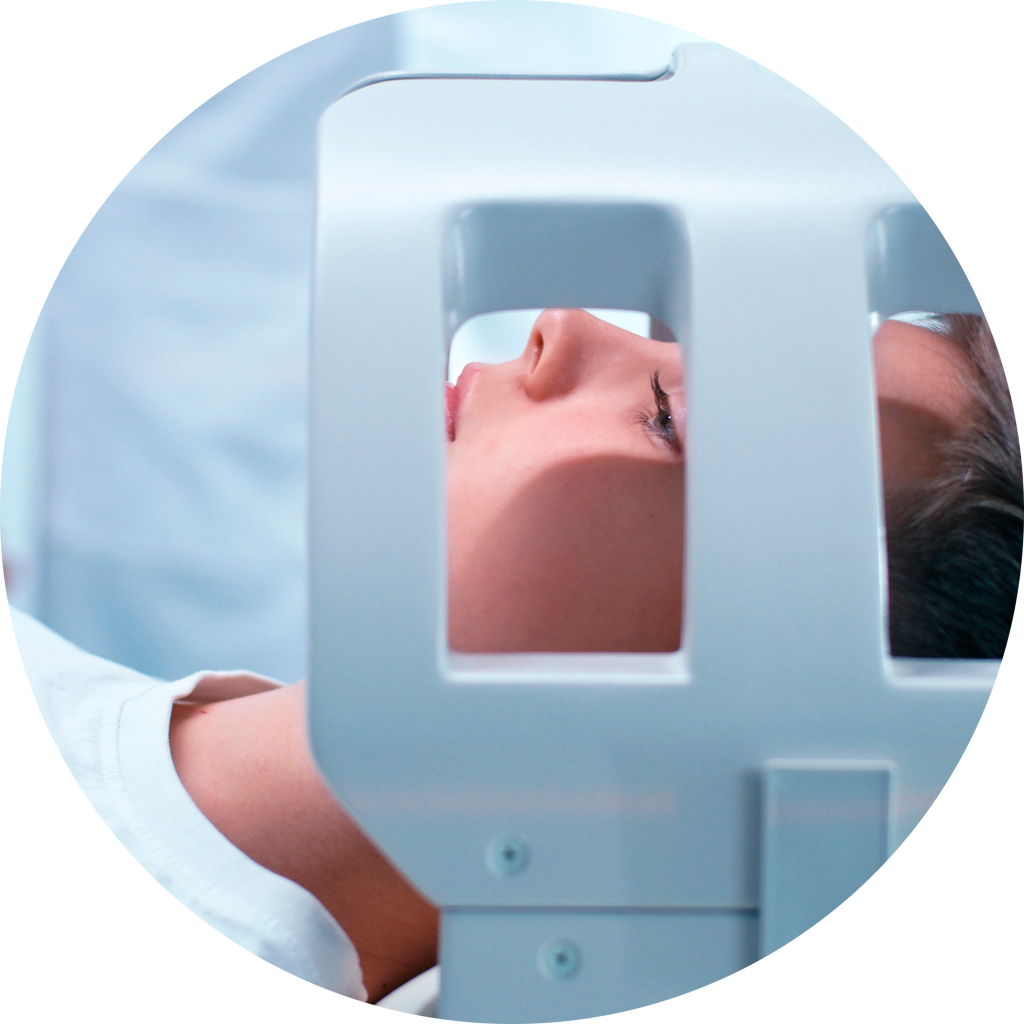
Diagnostic services
- Brain imaging devices are in high demand, and patients often need to wait a long time for elective tests.
- An alternative to brain imaging, cerebrospinal fluid analysis, isn’t widely practised and is perceived as invasive.
- Current guidelines on the diagnosis and treatment of dementia are out of date, which affects how people access them and how public insurance covers them.

Fragmented infrastructure
- Pathways to a diagnosis and management of the disease are fragmented across care settings.
- Patients and caregivers have difficulties navigating health systems and accessing care.
- Reimbursement models for healthcare providers don’t match the complexity of providing care to people with Alzheimer’s.
Beat the clock
System-level changes are urgently needed.
Dedicated
funding
The federal government should renew its commitment to the 2019 national dementia strategy, backed with dedicated funding, and the provinces should make corresponding commitments.
Education and
training
Policy directives need to expand training for all healthcare professionals, and the public needs to be made more aware of the signs of and treatments for dementia.
Integrated care and adequate reimbursement
Current team-based models of care need to be expanded, and reimbursement models need to be designed through a value-based lens.
Optimized access to diagnostic services
Update the Canadian guidelines for diagnosis to improve access to and coverage of tests; use existing imaging equipment more efficiently and build capacity for alternative ways of diagnosing dementia.
Care navigation
strategy
Reconfigure systems and services so they are easy to find and use for those affected by Alzheimer’s.
Read the impact paper:
There’s Still Time: Paving a Path for Value-Based Dementia Care in Canada
January 24, 2022 • 66-min read
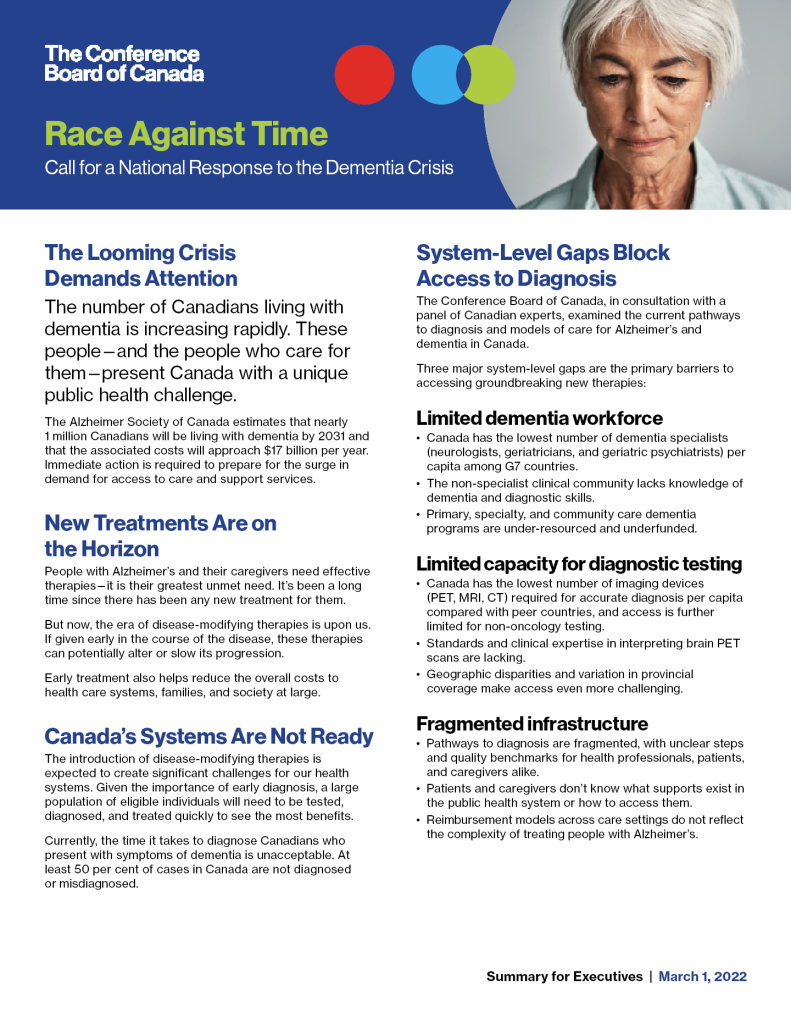
Read the summary for executives:
Race Against Time: Call for a National Response to the Dementia Crisis
March 1, 2022 • 3-min read
