


Environment
CEGE Indicators Platform
This page combines data from the following indicators:
Overview
- Energy consumers’ support for the sustainable energy transition is too passive. Emissions reductions primarily come from power sector decarbonization and regulated improvements to vehicles and buildings. Where are the consumers?
- Despite progress, emissions remain tethered to economic output. Emissions fell 9 per cent as per capita output plunged 10 per cent in 2020.
- Canadians need to take more responsibility for resource use. In our homes and workplaces, individuals have to do more to minimize waste and reduce the use of natural inputs like water, energy, and land.
Greenhouse Gas Emissions
Increasing concentrations of greenhouse gas emissions impact climate patterns, leading to catastrophic events.
Measurement: Greenhouse gas emissions, by economic sector

Quick Insights
- The COVID-19 pandemic led to a decline in economic activity so sharp that overall emissions from the economy decreased 9 per cent in 2020—the largest single-year decline in history. From 738 million tons of carbon dioxide equivalent (MTCO2e) in 2019, emissions fell to 672 MTCO2e in 2020.
- Advanced carbon-abatement technologies are essential for the viability of long-term resource extraction. While energy intensity fell 4 per cent, the 22 per cent increase in output in the energy sector drove a 13 per cent increase in overall emissions from 2012 to 2019.
- Energy consumers can no longer free-ride on power sector decarbonization. Electric vehicles and space heating present near-term opportunities for the average Canadian to contribute meaningfully to decarbonizing our economy.
How Does This Indicator Help Gauge a Better Future?
Relevant UN Sustainable Development Goals
SDG 3—Good health and well-being
- 3.9 By 2030, substantially reduce the number of deaths and illnesses from hazardous chemicals and air, water and soil pollution and contamination
SDG 7—Affordable and clean energy
- 7.2 By 2030, increase substantially the share of renewable energy in the global energy mix
- 7.b By 2030, expand infrastructure and upgrade technology for supplying modern and sustainable energy services for all in developing countries, in particular least developed countries, small island developing States, and land-locked developing countries, in accordance to their respective programs of support
SDG 8—Decent work and economic growth
- 8.4 Improve progressively, through 2030, global resource efficiency in consumption and production and endeavour to decouple economic growth from environmental degradation, in accordance with the 10-year framework of programmes on sustainable consumption and production, with developed countries taking the lead
SDG 9—Industry, innovation and infrastructure
- 9.4 By 2030, upgrade infrastructure and retrofit industries to make them sustainable, with increased resource-use efficiency and greater adoption of clean and environmentally sound technologies and industrial processes, with all countries taking actions in accordance with their respective capabilities
SDG 11—Sustainable cities and communities
- 11.3 By 2030, enhance inclusive and sustainable urbanization and capacity for participatory, integrated and sustainable human settlement planning and management in all countries
- 11.6 By 2030, reduce the adverse per capita environmental impact of cities, including by paying special attention to air quality and municipal and other waste management
SDG 12—Responsible consumption and production
- 12.2 By 2030, achieve the sustainable management and efficient use of natural resources
- 12.4 By 2020, achieve the environmentally sound management of chemicals and all wastes throughout their life cycle, in accordance with agreed international frameworks, and significantly reduce their release to air, water and soil in order to minimize their adverse impacts on human health and the environment
- 12.C Rationalize inefficient fossil-fuel subsidies that encourage wasteful consumption by removing market distortions, in accordance with national circumstances including by restructuring taxation and phasing out those harmful subsidies, where they exist, to reflect the environmental impacts, taking fully into account the specific needs and conditions of developing countries and minimizing the possible impacts on their development in a manner that protects the poor and the affected communities
SDG 13—Climate action
- 13.2 Integrate climate change measures into national policies, strategies, and planning
Air Pollution
Atmospheric pollutants harm human health and ecosystems.
Measurement: Criteria air contaminant (CAC) emissions

Quick Insights
- Annual criteria air contaminant (CAC) emissions continue their decline due to persistent improvements in CAC emissions from road vehicles in Canada.
- CAC emissions are likely to decline still more sharply as road transportation is electrified. Passenger transport alone contributed more than one-third of total CAC emitted in 2020. Eliminating coal power has substantially improved air quality.
- Air quality in the built environment will also continue to improve as electric space heating decreases the use of combustion-based CACs in residential, commercial, and institutional buildings.
How Does This Indicator Help Gauge a Better Future?
Relevant UN Sustainable Development Goals
SDG 3—Good health and well-being
- 3.9 By 2030, substantially reduce the number of deaths and illnesses from hazardous chemicals and air, water and soil pollution and contamination
SDG 7—Affordable and clean energy
- 7.2 By 2030, increase substantially the share of renewable energy in the global energy mix
- 7.b By 2030, expand infrastructure and upgrade technology for supplying modern and sustainable energy services for all in developing countries, in particular least developed countries, small island developing States, and land-locked developing countries, in accordance to their respective programs of support
SDG 8—Decent work and economic growth
- 8.4 Improve progressively, through 2030, global resource efficiency in consumption and production and endeavour to decouple economic growth from environmental degradation, in accordance with the 10-year framework of programmes on sustainable consumption and production, with developed countries taking the lead
SDG 9—Industry, innovation and infrastructure
- 9.4 By 2030, upgrade infrastructure and retrofit industries to make them sustainable, with increased resource-use efficiency and greater adoption of clean and environmentally sound technologies and industrial processes, with all countries taking actions in accordance with their respective capabilities
SDG 11—Sustainable cities and communities
- 11.3 By 2030, enhance inclusive and sustainable urbanization and capacity for participatory, integrated and sustainable human settlement planning and management in all countries
- 11.6 By 2030, reduce the adverse per capita environmental impact of cities, including by paying special attention to air quality and municipal and other waste management
SDG 12—Responsible consumption and production
- 12.2 By 2030, achieve the sustainable management and efficient use of natural resources
- 12.4 By 2020, achieve the environmentally sound management of chemicals and all wastes throughout their life cycle, in accordance with agreed international frameworks, and significantly reduce their release to air, water and soil in order to minimize their adverse impacts on human health and the environment
- 12.C Rationalize inefficient fossil-fuel subsidies that encourage wasteful consumption by removing market distortions, in accordance with national circumstances including by restructuring taxation and phasing out those harmful subsidies, where they exist, to reflect the environmental impacts, taking fully into account the specific needs and conditions of developing countries and minimizing the possible impacts on their development in a manner that protects the poor and the affected communities
SDG 13—Climate action
- 13.2 Integrate climate change measures into national policies, strategies, and planning
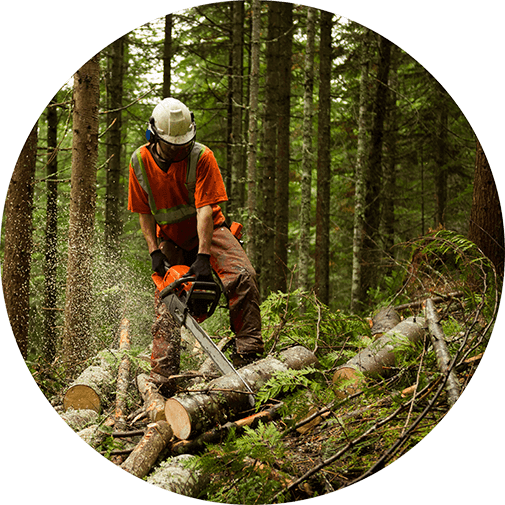
Deforestation
Forests are vital carbon sinks, and their deforestation hurts wildlife habits, biodiversity, air, soil, and water quality.
Measurement: Total area of deforestation in Canada, by industry
Quick Insights
- Agriculture accounts for more than half of the annual area deforested each year in Canada. Supporting practices that encourage a sustainable relationship between land use and forest cover should receive more support. Better practices will contribute greatly to the energy transition while also generating economic output for farmers.
- Nature-based climate solutions can reduce emissions. Agriculture and forestry must consider how the demand for nature-based carbon offsets can contribute to sustainable carbon-ecosystem management.
How Does This Indicator Help Gauge a Better Future?
Relevant UN Sustainable Development Goals
SDG 3—Good health and well-being
- 3.9 By 2030, substantially reduce the number of deaths and illnesses from hazardous chemicals and air, water and soil pollution and contamination
SDG 7—Affordable and clean energy
- 7.2 By 2030, increase substantially the share of renewable energy in the global energy mix
- 7.b By 2030, expand infrastructure and upgrade technology for supplying modern and sustainable energy services for all in developing countries, in particular least developed countries, small island developing States, and land-locked developing countries, in accordance to their respective programs of support
SDG 8—Decent work and economic growth
- 8.4 Improve progressively, through 2030, global resource efficiency in consumption and production and endeavour to decouple economic growth from environmental degradation, in accordance with the 10-year framework of programmes on sustainable consumption and production, with developed countries taking the lead
SDG 9—Industry, innovation and infrastructure
- 9.4 By 2030, upgrade infrastructure and retrofit industries to make them sustainable, with increased resource-use efficiency and greater adoption of clean and environmentally sound technologies and industrial processes, with all countries taking actions in accordance with their respective capabilities
SDG 11—Sustainable cities and communities
- 11.3 By 2030, enhance inclusive and sustainable urbanization and capacity for participatory, integrated and sustainable human settlement planning and management in all countries
- 11.6 By 2030, reduce the adverse per capita environmental impact of cities, including by paying special attention to air quality and municipal and other waste management
SDG 12—Responsible consumption and production
- 12.2 By 2030, achieve the sustainable management and efficient use of natural resources
- 12.4 By 2020, achieve the environmentally sound management of chemicals and all wastes throughout their life cycle, in accordance with agreed international frameworks, and significantly reduce their release to air, water and soil in order to minimize their adverse impacts on human health and the environment
- 12.C Rationalize inefficient fossil-fuel subsidies that encourage wasteful consumption by removing market distortions, in accordance with national circumstances including by restructuring taxation and phasing out those harmful subsidies, where they exist, to reflect the environmental impacts, taking fully into account the specific needs and conditions of developing countries and minimizing the possible impacts on their development in a manner that protects the poor and the affected communities
SDG 13—Climate action
- 13.2 Integrate climate change measures into national policies, strategies, and planning
Energy Use
Efficient energy use preserves non-renewable natural resources while minimizing waste and environmental harm.
Measurement: Primary and secondary energy use, by industry

Quick Insights
- Energy consumers have made little progress in decoupling energy from emissions. Energy and emissions grew nearly in tandem from 2012 to 2019. Data for 2020 show that they remain in lockstep.
- Energy use among energy producers became increasingly sustainable from 2012 to 2019 as energy intensity of output fell 4 per cent. To secure long-term viability, however, producers must deploy technologies capable of dramatically cutting emissions intensity.
How Does This Indicator Help Gauge a Better Future?
Relevant UN Sustainable Development Goals
SDG 7—Affordable and clean energy
- 7.1 By 2030, ensure universal access to affordable, reliable and modern energy services
- 7.2 By 2030, increase substantially the share of renewable energy in the global energy mix
- 7.3 By 2030, double the global rate of improvement in energy efficiency
- 7.4 By 2030, enhance international cooperation to facilitate access to clean energy research and technology, including renewable energy, energy efficiency and advanced cleaner fossil-fuel technology, and promote investment in energy infrastructure and clean energy technology
- 7.5 By 2030, expand infrastructure and upgrade technology for supplying modern and sustainable energy services for all in developing countries, in particular least developed countries, small island developing States, and land-locked developing countries, in accordance to their respective programs of support
SDG 8—Decent work and economic growth
- 8.4 Improve progressively, through 2030, global resource efficiency in consumption and production and endeavour to decouple economic growth from environmental degradation, in accordance with the 10-year framework of programmes on sustainable consumption and production, with developed countries taking the lead
SDG 12—Responsible consumption and production
- 12.2 By 2030, achieve the sustainable management and efficient use of natural resources
- 12.C Rationalize inefficient fossil-fuel subsidies that encourage wasteful consumption by removing market distortions, in accordance with national circumstances including by restructuring taxation and phasing out those harmful subsidies, where they exist, to reflect the environmental impacts, taking fully into account the specific needs and conditions of developing countries and minimizing the possible impacts on their development in a manner that protects the poor and the affected communities
Water Use
Efficient water use maximizes an essential resource and minimizes waste and environmental harm.
Measurement: Water use levels, by industry

Quick Insights
- As upstream producers hone the practice of solvent-assisted in-situ extraction of crude oil, water use intensity in unconventional oil production should peak and begin to decline toward 2030–40.
- Large institutional buildings like hospitals, office buildings, and educational facilities are reducing water use intensity. On the other hand, consumer-focused industries like entertainment, recreation, and transportation are consuming more water. These latter industries must do better.
- Global demand for metals and non-metallic minerals is competing with other water-intensive sectors important to the energy transition. Governments and regulators must figure out how to balance scarce water resources.
How Does This Indicator Help Gauge a Better Future?
Relevant UN Sustainable Development Goals
SDG 7—Affordable and clean energy
- 7.1 By 2030, ensure universal access to affordable, reliable and modern energy services
- 7.2 By 2030, increase substantially the share of renewable energy in the global energy mix
- 7.3 By 2030, double the global rate of improvement in energy efficiency
- 7.4 By 2030, enhance international cooperation to facilitate access to clean energy research and technology, including renewable energy, energy efficiency and advanced cleaner fossil-fuel technology, and promote investment in energy infrastructure and clean energy technology
- 7.5 By 2030, expand infrastructure and upgrade technology for supplying modern and sustainable energy services for all in developing countries, in particular least developed countries, small island developing States, and land-locked developing countries, in accordance to their respective programs of support
SDG 8—Decent work and economic growth
- 8.4 Improve progressively, through 2030, global resource efficiency in consumption and production and endeavour to decouple economic growth from environmental degradation, in accordance with the 10-year framework of programmes on sustainable consumption and production, with developed countries taking the lead
SDG 12—Responsible consumption and production
- 12.2 By 2030, achieve the sustainable management and efficient use of natural resources
- 12.C Rationalize inefficient fossil-fuel subsidies that encourage wasteful consumption by removing market distortions, in accordance with national circumstances including by restructuring taxation and phasing out those harmful subsidies, where they exist, to reflect the environmental impacts, taking fully into account the specific needs and conditions of developing countries and minimizing the possible impacts on their development in a manner that protects the poor and the affected communities

For a deeper look, read our issue briefing:
Measuring What Matters: An Energy-system Perspective on Sustainability