


Finding Balance
The Canadian Beverage Association is trying to help Canadians consume fewer calories from non‑alcoholic/non‑dairy liquid refreshment beverages (LRBs).
Through the Balance Calories Initiative (BCI), the association hopes to reduce the average number of LRB calories each person consumes from LRBs each day by 20 per cent between 2014 and 2025. Signal49 Research has been monitoring the initiative’s progress.
Here’s what we’ve found.

Canadians are consuming fewer calories
Since 2014, the average number of calories Canadians consume from LRBs in a day has fallen 16 per cent. With five years left to meet the 20 per cent reduction target, the BCI is on track to meet its target.
Fewer calories are being consumed from liquid refreshment beverages
(average calories per person per day)

Sources: Signal49 Research; GlobalData; Statistics Canada, table 17-10-0005-01.
Calorie intensity is changing
The total volume of liquid refreshment beverages consumed has grown 4 per cent since 2014, while the average calories per litre has fallen 19 per cent. This means that Canadians are consuming fewer calories from LRBs because there are fewer to consume, rather than because they are drinking less.
Fall in average LRB calories main driver reducing daily consumption of LRB calories
(percentage change)

Sources: Signal49 Research; GlobalData.

Increased health consciousness among consumers is one of the reasons for reduced consumption of high-calorie drinks.
Calorie intensity is changing
The total volume of liquid refreshment beverages consumed has grown 4 per cent since 2014, while the average calories per litre has fallen 19 per cent. This means that Canadians are consuming fewer calories from LRBs because there are fewer to consume, rather than because they are drinking less.
Low-calorie LRB servings are almost equal with high-calorie LRB servings
(share of servings within total volumes of beverages, 2019, per cent)

Sources: Signal49 Research; GlobalData.
Not all segments are the same
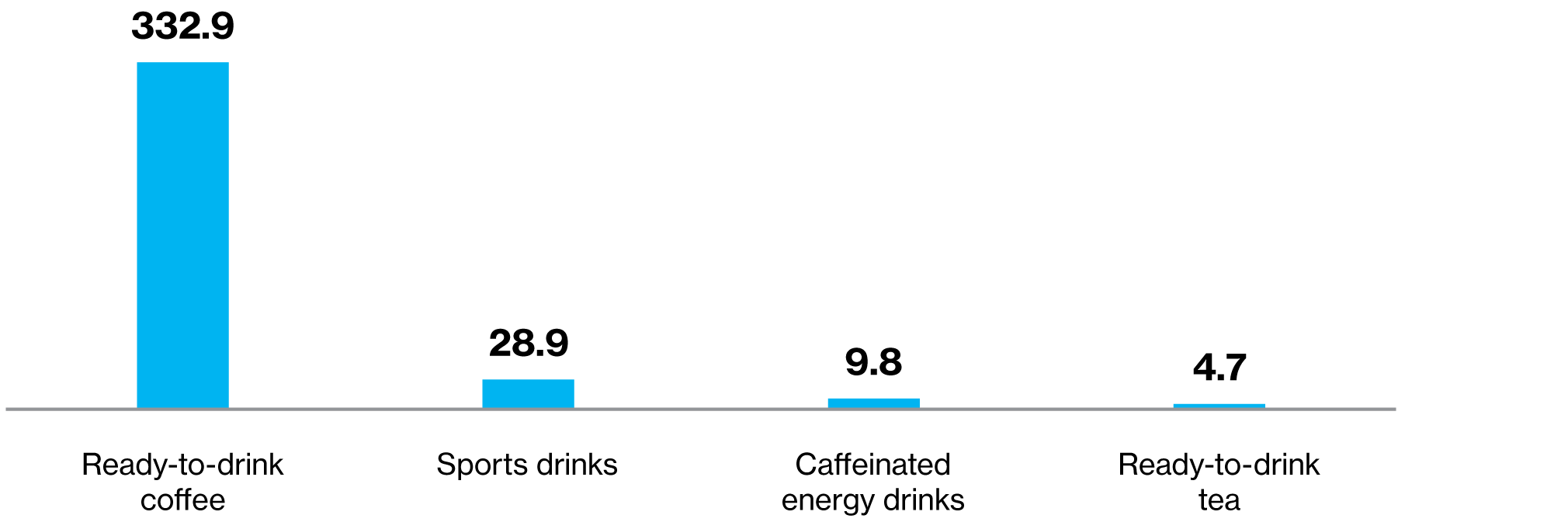
Different liquid refreshment beverage segments have reported different changes in calorie consumption since 2014. Consumers are drinking fewer calories each day from carbonated soft drinks, enhanced and flavoured packaged water, juices, nectars, and still drinks. However, calories consumed from iced tea, sports drinks, caffeinated energy drinks, and iced coffee have increased.

These LRB segments contribute more toward daily calories per person per day than they did in 2014
(change in daily calories per person, per cent, 2014–19)
Sources: Signal49 Research; GlobalData.
Different LRB segments have reported different changes in calorie consumption since 2014. Consumers are drinking fewer calories each day from carbonated soft drinks, enhanced and flavoured packaged water, juices, nectars, and still drinks. However, calories consumed from iced tea, sports drinks, caffeinated energy drinks, and iced coffee have increased.
Carbonated soft drinks and juices contribute the largest share of daily LRB calories consumed
(share of calories per day person, 2019, per cent)
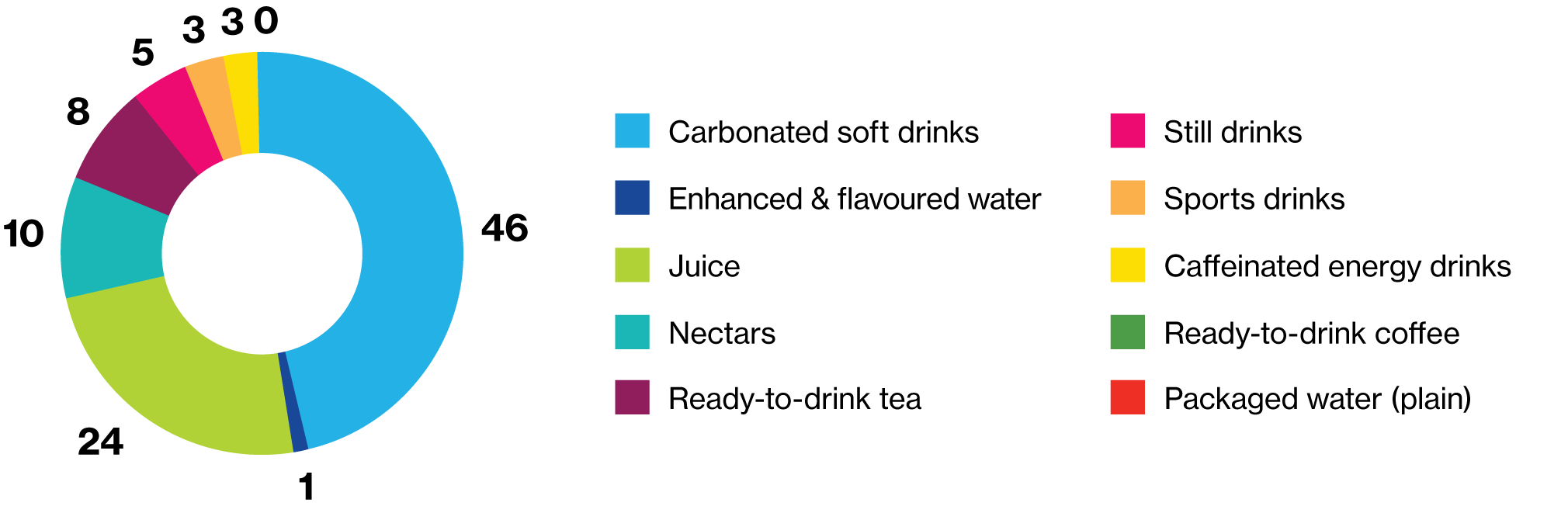
Note: Packaged water (plain) contains no calories, so it doesn’t show in the chart.
Results have been rounded up to the nearest whole number. The share of RTD Coffee is 0.5% and therefore shows as 0% in the chart.
Sources: Signal49 Research; GlobalData.