

Indigenous Community Health Workers in Canada
Revealing a Critical Backbone of Community Health
Français • March 11, 2026
The role of Indigenous community health workers
Indigenous community health workers are front-line staff in support-based roles who deliver a variety of health services in communities. Their work may include health promotion, diabetes care, birth work, and mental health supports, depending on community needs. Community health workers are often more important in rural and remote communities, where geographic isolation and distance from services make it difficult for Indigenous people to access healthcare.1
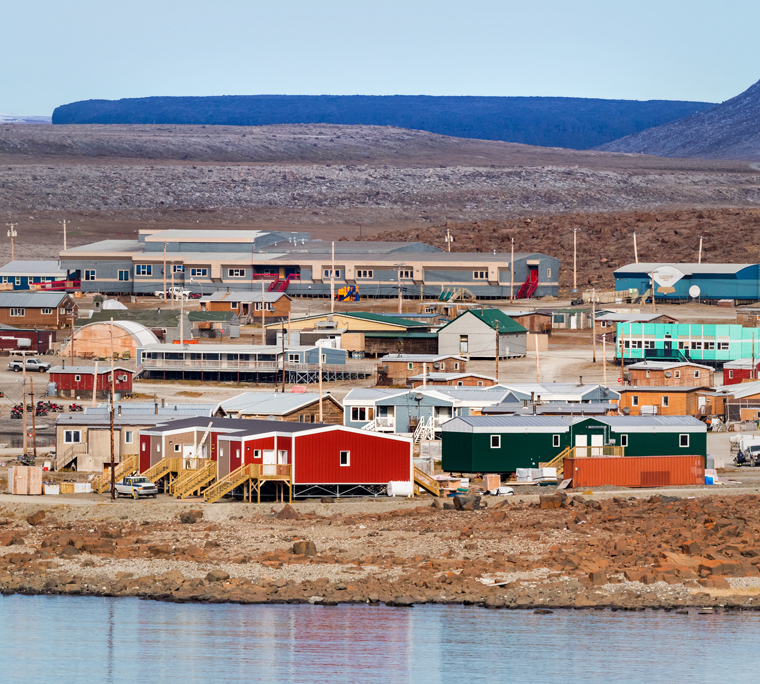
Doctors aren’t always available to First Nations living on-reserve, and nurses rotate in and out of communities frequently.2 Recruiting and retaining permanent health professionals in Inuit communities has been a significant challenge, with a very small number of Inuit working in the healthcare system.3 In addition, Indigenous people’s experiences of racism and discrimination in the healthcare system have led to delays in receiving care or lack of care.4
While they don’t replace doctors and nurses, Indigenous community health workers fill a critical gap in rural and remote communities by providing culturally safe health services and continuity of supportive care.5 They are often members of the communities they serve, and may share language, culture, and lived experience with fellow community members.6 Indigenous community health workers can also serve as bridges between community members and the healthcare system.7 Cultural safety is a part of their practice that entails helping community members feel safe from racism and discrimination when receiving care.8 In addition, Indigenous community health workers are more likely to be able to relate to and address Indigenous determinants of health, including relationship to land, self-determination, and cultural continuity.9

However, unlike doctors and nurses, community health workers are not formally recognized as a regulated profession, with the exception of Alberta. In general, being regulated as a healthcare professional in Canada means having a degree from an accredited school, completing post-graduate education or training, and passing certain assessments.10 It can also entail regulation by a governing body at the provincial or territorial level.11
In addition, Indigenous community health workers don’t have a national network or association to represent them. Job descriptions for Indigenous community health worker roles also vary among Indigenous health authorities and communities and across the National Occupational Classification system.12 This lack of regulation, a network or association, and role consistency may result in inequitable education opportunities and training challenges and limited visibility for community health workers, which may be amplified in rural and remote communities.
As one step in a larger project, in this analysis we draw on Statistics Canada data to make this hidden yet essential workforce more visible. We highlight where Indigenous community health workers are located, describe the job settings in which they work, and profile their educational backgrounds.13 However, the data presents only a partial picture of Indigenous community health workers based on available statistics, rather than qualitative interviews, narratives, and their lived experience. We will provide a more in-depth analysis of Indigenous community health worker roles and training opportunities and challenges in a report to be released in winter 2026.
- Oosterveer and Young, “Primary Health Care Accessibility Challenges.”
- Minore and others, “The Effects of Nursing Turnover”; Cherba, Healey Akearok, and MacDonald, “Addressing Provider Turnover.”
- Inuit Tapiriit Kanatami, Social Determinants of Inuit Health in Canada.
- Public Health Agency of Canada, “Indigenous People’s Experiences.”
- Minore and others, “Realistic Expectations.”
- Minore and others.
- Minore and others.
- First Nations Health Authority, Anti-Racism, Cultural Safety & Humility Framework.
- Greenwood, Leeuw, and Lindsay, Determinants of Indigenous Peoples’ Health.
- Whiteside and others, “Spotlight.”
- Foong, “Professional Regulation in Healthcare.”
- Statistics Canada, “National Occupational Classification (NOC) 2021 Version 1.0.”
- Statistics Canada, “Census Profile, 2021 Census of Population.”
The North has the highest share
Community health workers fill important healthcare roles across Canada, particularly in the North. A higher proportion of community health workers identify as Indigenous and live on-reserve in Northern regions compared with Indigenous community health workers working off-reserve in the North or on-reserve in the South.
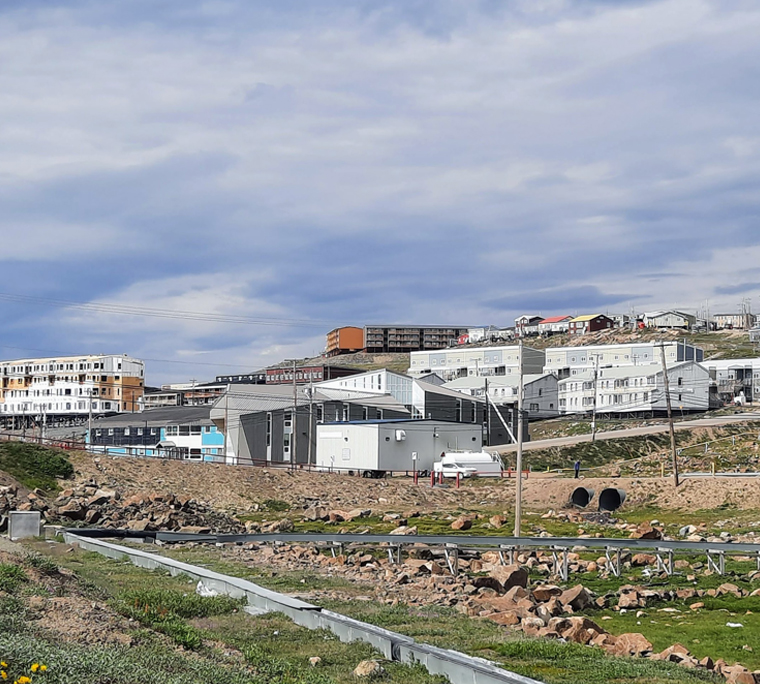
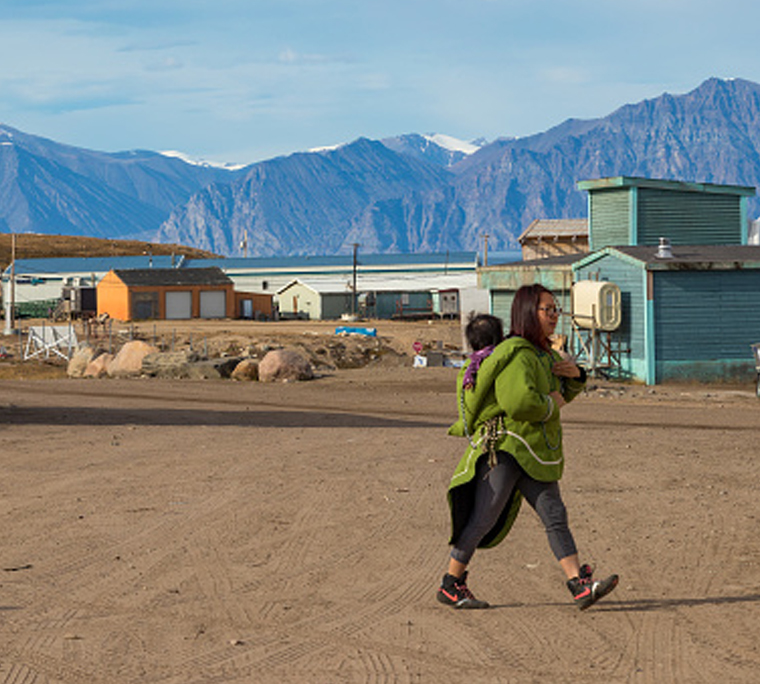
Health regions that include Nunavut, northern Quebec, northern Saskatchewan, and northern Manitoba have the highest proportions of Indigenous community health workers nationally. Recruitment and retention challenges are well-documented in Nunavut, reinforcing the important role that Indigenous community health workers play in maintaining consistent access to culturally safe care in those contexts.1
- Inuit Tapiriit Kanatami, Social Determinants of Inuit Health in Canada.
Serving across diverse settings
Indigenous community health workers in the North occupy a wide range of healthcare and social service settings. The largest share work in social assistance settings, a broad category that includes individual and family services, community food and housing, emergency relief, vocational rehabilitation, and child care services.1 There is a much lower share of Indigenous community health workers in nursing and residential care facilities and hospital settings, which may be because these facilities are limited or absent in many Northern communities.2

Because the North American Industry Classification System (NAICS) Social and Community Service Worker category is broad, some of these positions may fall outside narrow definitions of community health work. This breadth means the data likely captures a mix of health-related and social service roles that all contribute to community wellbeing.
Still, the concentration of these workers in social assistance highlights both community demand for social programs and a social determinants approach to healthcare that links health to housing, income, and family wellbeing.3 Many of the programs that embody this integrated approach are federally or territorially funded and delivered through Indigenous service frameworks. Federal and territorial initiatives such as the First Nations Child and Family Services Program,4 Jordan’s Principle,5 the Inuit Child First Initiative,6 and the Pathways to Safe Indigenous Communities Initiative7 fall under this umbrella.
Across the northern provincial regions and territories, Indigenous community health workers mainly work in social assistance and ambulatory healthcare. In some areas—such as northern Newfoundland and Labrador, the Northwest Territories, and Nunavut—none are employed in hospitals, reflecting the scarcity of such facilities.8 For example, Nunavut has only one hospital: Qikiqtani General in Iqaluit, where nearly half the population is non-Indigenous.9
Breaking the data down for Northern reserves shows that Indigenous community health workers are employed across 10 occupational groups, with home healthcare notably absent. Most are concentrated in individual and family services, including child and youth programs, supports for Elders and people with disabilities, and other non-residential services. This pattern likely reflects both the broad scope of the social assistance classification and the greater availability of social programs compared with medical facilities on-reserve.10
- Statistics Canada, “NAICS 2022 Version 1.0; 624: Social Assistance.”
- National Collaborating Centre for Indigenous Health, Access to Health Services.
- Loppie and Wien, Understanding Indigenous Health Inequalities.
- Indigenous Services Canada, “Assisted Living Program.”
- Indigenous Services Canada, “Funding for Capital Assets.”
- Indigenous Services Canada, “Supporting Inuit Children.”
- Indigenous Services Canada, “Pathways to Safe Indigenous Communities Initiative.”
- National Collaborating Centre for Indigenous Health, Access to Health Services.
- Statistics Canada, “Profile Table, Census Profile, 2021 Census of Population: Iqaluit, City (CY) [Census Subdivision], Nunavut.”
- Statistics Canada, “ North American Industry Classification System (NAICS) Canada 2022 Version 1.0; 6241: Individual and Family Services—Industry Group.”
Educational attainment highest in the North off-reserve
Northern Indigenous community health workers living on-reserve face considerable barriers to formal education and career advancement, which is reflected in their educational attainment. Over a quarter (26.1%) have no certificate, diploma, or degree—almost twice the rate of those living off-reserve in the North (13.9%) or on-reserve in the South (14.4%). Fewer (45.6%) hold post-secondary qualifications compared with Indigenous community health workers living off-reserve in the North (59.4%) and on-reserve in the South (56.3%).
Long-standing and region-specific barriers to education, including intergenerational trauma from residential schools, are important factors associated with educational attainment.1 Many Northern reserves have limited access to secondary and post-secondary programming, which means students must leave their communities to continue their studies. The resulting separation from family and culture,2 combined with Eurocentric curricula3 and limited cultural safety, can create anxiety and contribute to higher dropout rates.4 Poverty, which disproportionately affects First Nations on-reserve and Inuit households, further constrains educational opportunities and outcomes.5
These findings align with national Census data showing that First Nations people with Registered or Treaty Indian status living on-reserve are less likely to hold post-secondary credentials than those living off-reserve.6 However, formal education statistics overlook on-the-job training and traditional learning, which are vital to community health work. Many workers gain specialized skills through employment and mentorship or by drawing on cultural and healing knowledge shared by Elders.7
Regional patterns in formal education
Educational disparities across Canada are most pronounced in northern Newfoundland and Labrador and Nunavut, where 66.7% and 36.8% of Indigenous community health workers, respectively, have no certificate, diploma, or degree—the highest rates nationally. Post-secondary attainment is also lowest in these regions (20.2% and 39.7%), reflecting broader Northern trends.8
Across the North, particularly in Nunavut, northern Quebec, northern Saskatchewan, and northern Manitoba, lower educational attainment aligns with low population density and high Indigenous populations. In these regions, roughly one-quarter to one-third of Indigenous community health workers lack formal credentials, while fewer than half hold post-secondary qualifications.
These outcomes mirror wider provincial and territorial patterns: both Newfoundland and Labrador and Nunavut have among the highest shares of residents without formal education. Nunavut’s entirely Northern geography and its place within Inuit Nunangat amplify these barriers.9 All regions of Inuit Nunangat are considered remote or very remote, and Inuit living there are less likely to complete post-secondary education than those living elsewhere.10
Yet these figures do not capture the informal and culturally grounded learning that many Indigenous community health workers gain through community practice, mentorship, and traditional knowledge—forms of education that remain vital to workforce development in remote regions.11
- Truth and Reconciliation Commission of Canada, Honouring the Truth, Reconciling for the Future.
- Richmond and Smith, “Sense of Belonging.”
- Battiste, Decolonizing Education.
- Deonandan, Janoudi, and Uzun, “Closing the Aboriginal Education Gap.”
- Reading and Wien, Health Inequalities and Social Determinants.
- Statistics Canada, “Postsecondary Educational Attainment.”
- National Collaborating Centre for Indigenous Health, Access to Health Services.
- Statistics Canada, “Highest Level of Education by Geography.”
- National Collaborating Centre for Indigenous Health, Education as a Social Determinant; Battiste, Decolonizing Education; Richmond and Smith, “Sense of Belonging.”
- Statistics Canada, “Postsecondary Educational Attainment.”
- National Collaborating Centre for Indigenous Health, Access to Health Services.
This research was prepared with financial support provided through the Government of Canada’s Future Skills Program. We are proud to serve as a research partner in the Future Skills Centre consortium.
Many colleagues helped to bring this research to life. Adam Fiser, Principal Research Associate, PhD, conceived of this initiative and provided guidance and insights throughout the research process. Bethany Haalboom, Lead Research Associate, PhD, and Jacob LeBlanc, Senior Research Associate, MAE, were the lead researchers on the project.
We also wish to thank the members of the research advisory board who supported this research:
- Madison Pierce, RD, CDE, Manager, Community Health Workers Diabetes Program, Sioux Lookout First Nation Health Authority
- Dr. Michelle Hensel, MD, Medical Director, Community Health Aide Program, Alaska Native Tribal Health Consortium
- Dr. Christine Lalonde, PhD, Director of Health Services, Nipissing First Nation
- Jason Brown, Director, Department of Inuit Employment, Nunavut Tunngavik Inc.
See the technical report for our detailed methodology:
FSC partners




The responsibility for the findings and conclusions of this research rests entirely with Signal49 Research.