

Cool Ideas: Can New Technologies Improve the Quality of Life in the North?
We live in an age of practical science fiction. In the 1960s and 1970s, television programs like The Jetsons and Star Trek offered fanciful glimpses of the distant future, with flying cars; automated vehicles; hand-held medical devices that cured major problems; and a thousand other devices, processes, services, and tools that promised a very different path for human beings. Many of these television series were poor predictors of the future. Few shared any early suggestions about social media, smart phones, or quantum computers. These were times of significant technological change—the early days of computers, satellite television, and other innovations—creating considerable excitement about how science could generate major advances in quality of life.
We once again find ourselves in heady times for fans of technological change around the world. But the level of excitement is more muted in the small and isolated communities across Canada’s territories and provincial norths. (See Exhibit 1.) Many innovations rely on stable and powerful Internet services, something that few places in the North enjoy. Indeed, much of the Yukon lacks Internet redundancy (systems that keep data flowing even when the initial connection is lost) and quality, high-speed access—though there are plans to address this issue in the coming years.1 The largely satellite-based Internet in Nunavut and the Northwest Territories—is expensive and slow.2 Consequently, northern uptake of Internet-based innovations lags well behind southern and urban Canada. Beyond the availability and quality of Internet services, there are a host of other factors that will affect how new and emerging technologies are perceived and pursued across the country’s northern regions.
Exhibit 1
Northern and Remote Canada
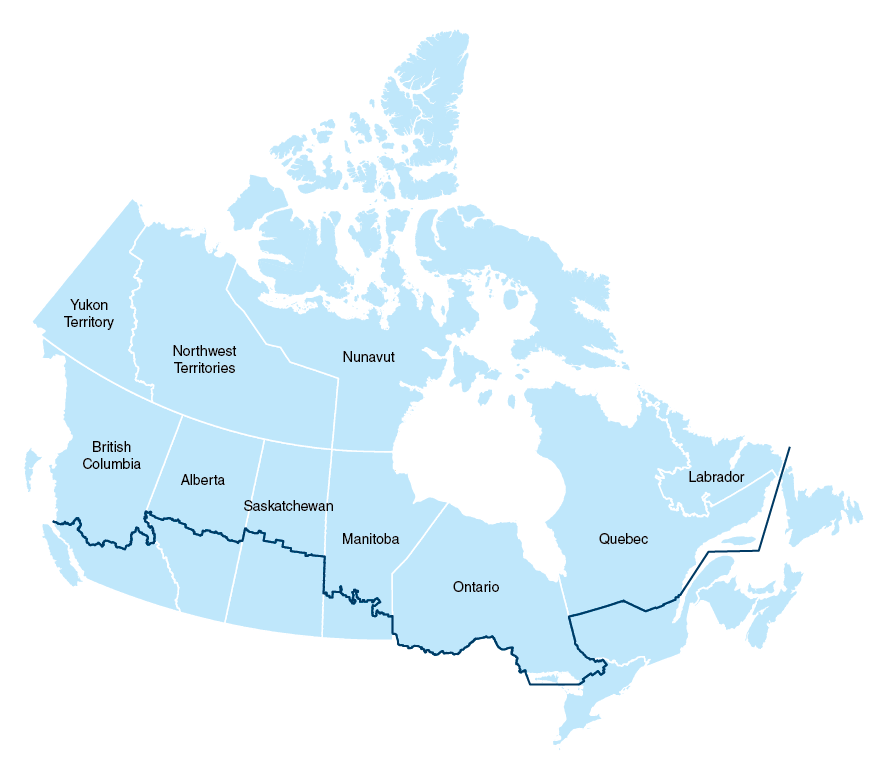
Source: Signal49 Research, Centre for the North.
The Cool Ideas Series
The Cool Ideas series is based on the recognition that scientific and technological innovations may contribute substantially to the improvement of the quality of life in Northern and Indigenous communities. Equally, emerging technologies could have disruptive and even destructive impacts on northern living. For every technology (e.g. food factories) that could address a major northern challenge (in this case, food security), there is likely another (e.g. e-commerce) that could interfere or undermine core services (such as local stores) in the communities. Technological change is neither a universally “good thing” nor an unrelentingly “bad thing.” Instead, technological advances are value neutral. What matters is how, by whom, and for what purpose they are utilized.
Cool Ideas is designed to spark a nationwide and circumpolar conversation about the technological future of the Canadian North. It argues against passivity in the face of rapid change. It urges Northerners to consider emerging opportunities in a thoughtful and creative manner, weighing the costs and benefits of new systems and looking for ways to use emerging technologies to address real and persistent northern socio-economic and cultural futures. By profiling new products, services, or devices, Cool Ideas encourages Northerners to give serious thought to how technologies are likely to disrupt community life—positively, negatively, or both.
Cool Ideas—Starting the Innovation Conversation
Cool Ideas is not designed to provide definitive answers on the merits or pitfalls of technological innovations or their implications for the North. Rather, the series is meant to introduce specific innovations for consideration and to induce dialogue, debate, and careful contemplation. The series is also structured to incent further research on the technologies it addresses and to highlight those areas where additional investigation would offer the most value. It recognizes and acknowledges that there is much that is unknown, with many considerations and issues in need of analysis. The future is an unusual and unknown place, particularly in the North, where there are many barriers to full participation in 21st century technological innovations. This series is built on the premise that we want neither to miss out on opportunities associated with innovation nor to be caught off guard by technologies that could prove highly disruptive or destructive.
The North cannot ignore the age of technological transformation. It is unclear if the new innovations will usher in the second “Machine Age” or only bring about small and incremental change. Some recent technologies, with smart phones being the best example, have been adopted widely across the North and have had sweeping (though indeterminate and complicated) impacts. Others, such as innovations in solar or wind power, are being explored systematically. Still others, like the use of robots to perform remote surgery, have not yet entered substantially into the regional conversation.3 There are a lot of “cool ideas” in circulation. In this series, we will examine one technology at a time, reflecting on the challenges, opportunities, and potential benefits of recent innovations.
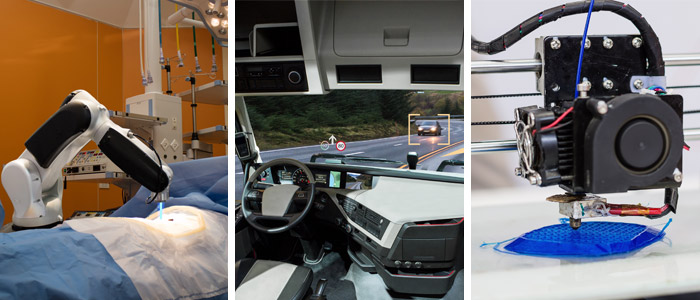
Some cool ideas (from left to right): A surgical robot; a self-driving truck concept with heads-up display; a 3D printer.
Source: Getty Images.
A caveat is required. Some technologies will roll out more slowly than expected, taking years to get to the proverbial tipping point. Some of the examples discussed in the Cool Ideas series, for example, are in the initial stages of development. They might emerge as major forces in the North in the next few years, or they might not be viable and economical for another 30 years. At both extremes, it is important that Northerners give careful attention to the emerging technologies that could transform the North in fairly rapid order or, if the North opts out of adoption, could leave the region lagging well behind the rest of the world. Beware of taking technological change lightly. Sub-Saharan Africa, long an economic laggard, has been reacting quickly to new solutions, particularly related to the mobile Internet, and is trying to accelerate change in the region.4
The North’s future is at stake. But be wary of futurists who promise rapid and uniformly positive transitions. Technological change creates winners, like Google and Facebook, and major losers, like the international newspaper industry. The transitions can bring major benefits for consumers, as users of Amazon.com typically claim, but usually by undermining the commercial models of existing businesses. Uncertainty is the hallmark of the 21st century, as technology creates changes in the workforce, as automation and robots transform industrial environments, and as artificial intelligence threatens to redefine the role of human beings in our economic systems. Careful and constructive consideration and investigation should be given to new technologies, alongside an open mind about their suitability. Properly done, new technologies can promote major and constructive changes in the quality of life across the region. Done poorly, the same technologies could bring about substantial disruption and the deterioration of life opportunities.5
1 Rush, The. “Yukon Announces New Redundant Internet Fibre Optic Loop.”
2 Canadian Radio-Television and Telecommunications Commission, Satellite Inquiry Report, 47, 54.
3 Pinker, Enlightenment Now; Diamandis, Abundance; Brynjolfsson and McAfee, The Second Machine Age.
4 Diop, “Africa Can Enjoy Leapfrog Development.”
5 There are great international debates about the future of technology. One of the best books in this genre is Michio Kaku’s Physics of the Future: How Science Will Shape Human Destiny and Our Daily Lives by the Year 2100. This is particularly the case with artificial intelligence. See Tegmark, Life 3.0; and Barrat, Our Final Invention.