


AI on the Horizon: July 23, 2026 Update
Canada’s latest AI news on the economy, society, and policy. In this issue of AI on the Horizon, we take a close look at the recent developments in initial public offerings and open-source models.
A tale of two filings
While our previous issues covered several leaps in performance, innovation, and the economics of AI, the boom cycle in the investment world for AI hardware players continues to defy gravity. NVIDIA, with a $5T valuation, has rocketed past incumbent technology firms like Amazon, Microsoft, and Google, and companies deeper in the AI chip stack like SK Hynix have already exceeded the $1T mark.
The market keeps rewarding the companies’ selling picks and shovels in the AI gold rush. Retail investors, however, want a way into the firms building the models and platforms themselves.
This puts OpenAI and Anthropic at the centre of the next big test. These two AI model standouts filed for IPOs this summer, with rumours of a late 2026 debut for retail stock offerings. Legal troubles, government contracts, and a race to general artificial intelligence have added a lot of noise, but the signal remains valuation. Both have disclosed near 1T valuations, revenues ranging from $20 to 40 billion annually, and costs from their computing hardware alone somewhere in the $20 billion ballpark.
So, are these companies selling something worth its weight in gold?
Taking off, or touching down?
SpaceX’s recent IPO offers bullish onlookers a healthy dose of reality. Best known for its Starlink services and rocket launches, they opened to public investors in June. After briefly reaching a sky-high valuation of $2.9T, they began touching down, now less than their opening price.
Based on industrial classification, SpaceX claims it’s an AI company. SpaceX includes xAI, which is actively testing satellites capable of running AI models. However, competition is heating up in the space race. For now, xAI still looks like a costly bet. But over the long run, we will learn whether space data centres really mark the next frontier.
Open-source competition
Investors are pricing AI companies as if frontier models will remain highly differentiated and highly profitable, but open-source competition directly challenges that assumption. Previously, usage-based pricing turned AI adoption into a consumption game, where tokenmaxxing (a phenomena where enterprises consume as much AI as the budget allows) pushed organisations to run more prompts, and absorb rising platform adoption costs, often before they could prove clear business value. But the performance of open-source models is catching up to state-of-the-art models. Moonshot AI, a Chinese competitor to OpenAI and Anthropic, released their most performant publicly accessible model yet, Kimi K3. The model performs close to the latest US-owned systems and gives the market its strongest challenger since DeepSeek R1.
US regulators and competition are increasingly suspicious of these open-sourced models, suggesting illicit distillation, and potentially blocking access to these models for further enterprise applications. If open-source models continue to compete at the frontier, they could become the canary in the coal mine for today’s AI platform IPOs.
On the horizon: How exposed is Canadian investment?
Canadian pensions have already gone long on AI, and if you happen to contribute to one, you are already fuelling data center development.
Meanwhile, Canada’s telecom players continue to expand their scope of sovereign compute partnerships and deals, but continued competition from US-based firms suggest this is going to be a slow burn.
Canada’s quantum champion Xanadu debuted on public markets in the spring around $14 CAD/share and buoyed up to nearly $50 CAD/share after NVIDIA announced AI-powered workflows to build fault-tolerant quantum systems. And Canada’s AI champion Cohere also competes in the model-platform race. While IPO chatter remains quiet, its recent merger announcement with a German startup points to another path.
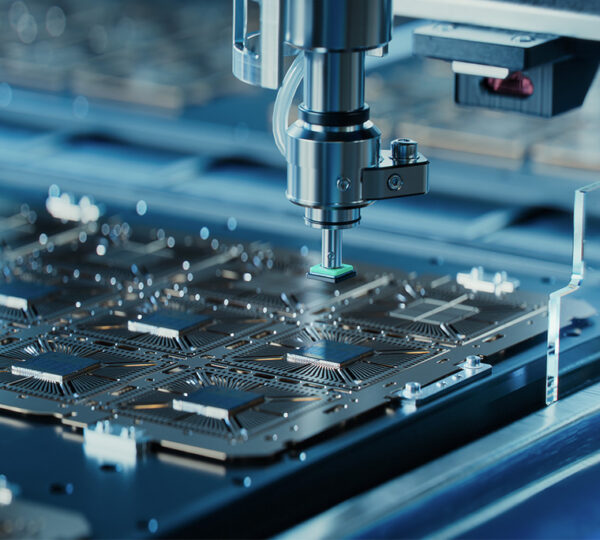
Learn more about Canadian and American patent ownership in computer technologies, semiconductors, and digital communication.
Related Insights
-

Retombées économiques de la mise en service d’une centrale nucléaire EC6 en Saskatchewan
English Principales conclusions
-

Inflation Stays Elevated in September, but Core Measures Remain Contained
In September, the Consumer Price Index (CPI) rose by 3.1 per cent year-over-year (y/y), which was higher than August’s 3.0…
-

Labour Markets Failing to Gain Momentum Once Again
Employment declined by 68,000 (-0.3 per cent) in September, following a 42,000 decline in August. The labour force participation rate…